

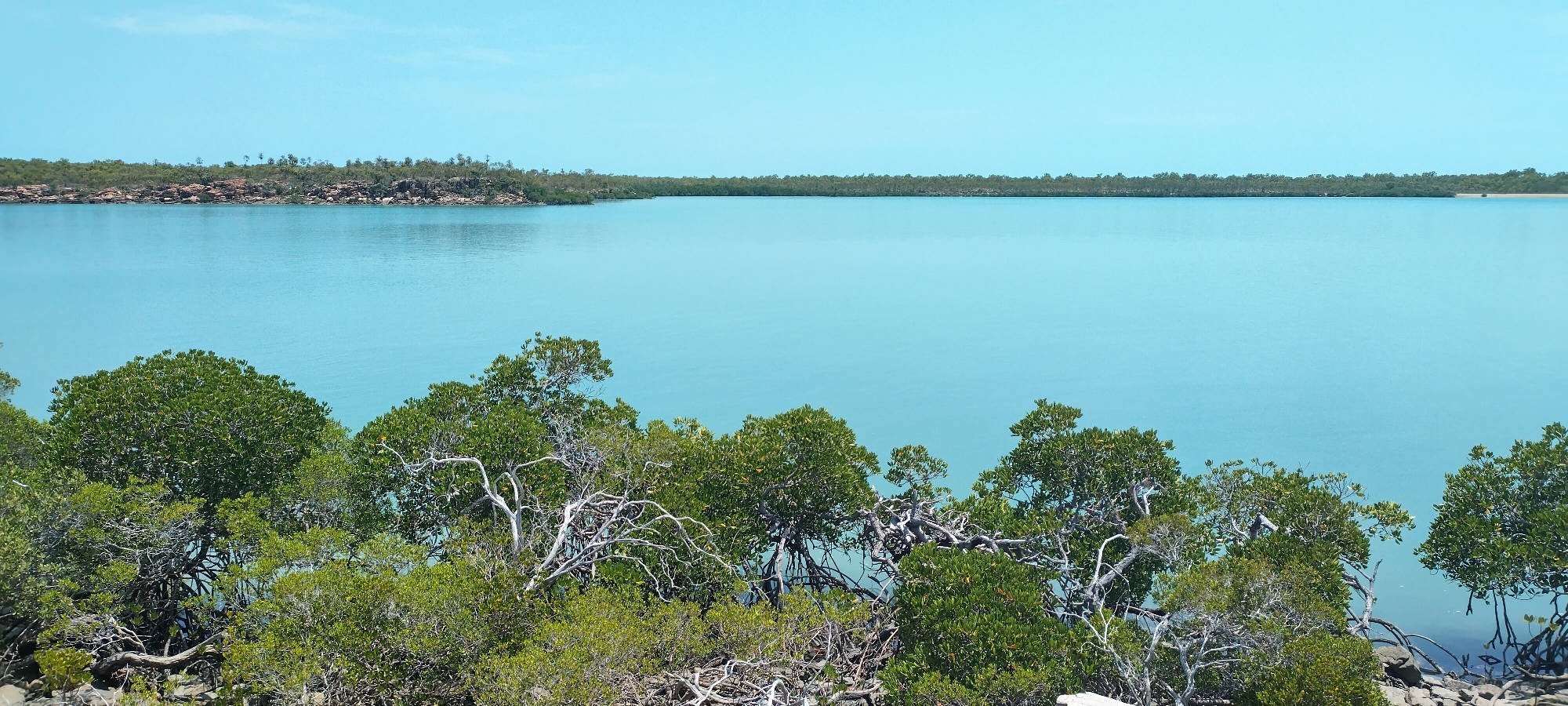
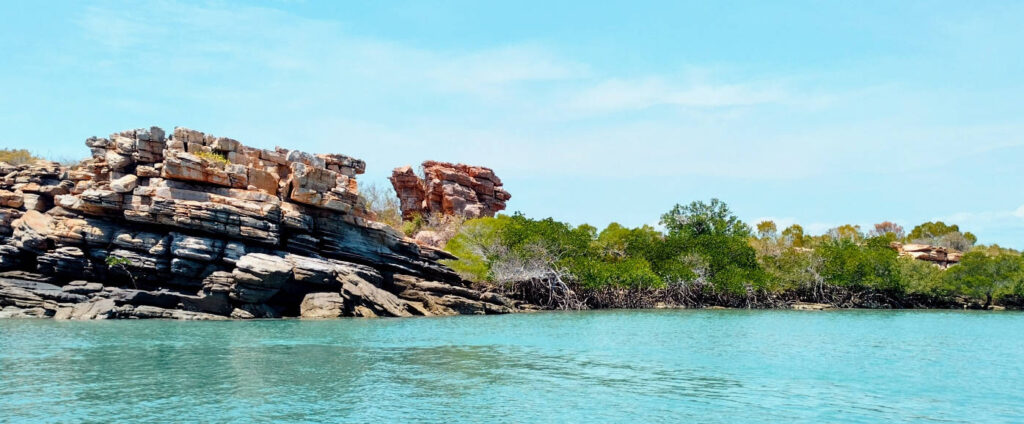
The view over the mangrove shore across the huge but shallow Circular Cove
We left Freshwater to return to Darwin, with a long range forecast that looked like we’d get light NW breeze for the long passage across the Bonaparte Gulf, and so headed for an anchorage that we could use to make the big jump. But once we arrived at Circular Cove on Niiwalarra (which was formerly known as Sir Graham Moore Island), we found the forecast breeze was not going to be strong enough, so had time to explore around the large but shallow cove.
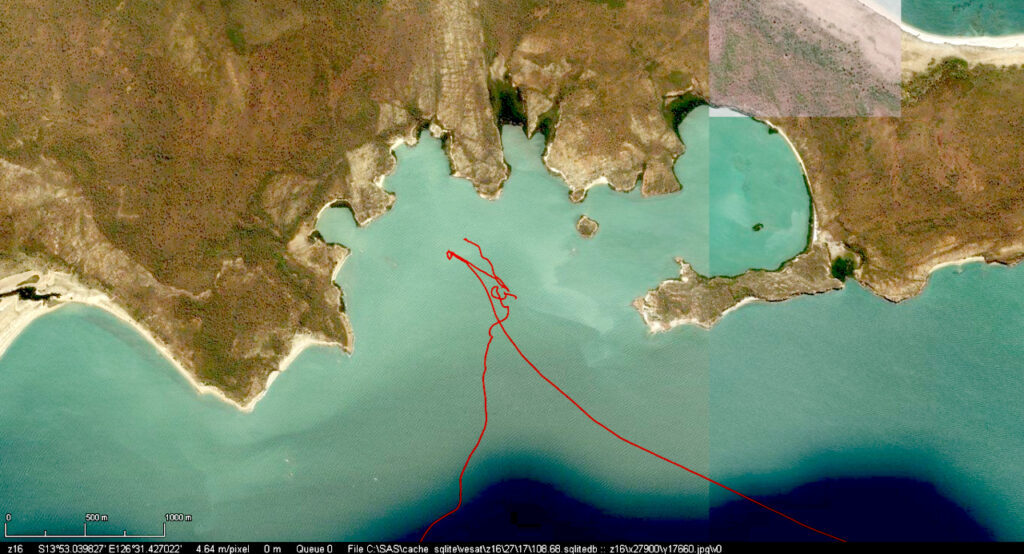
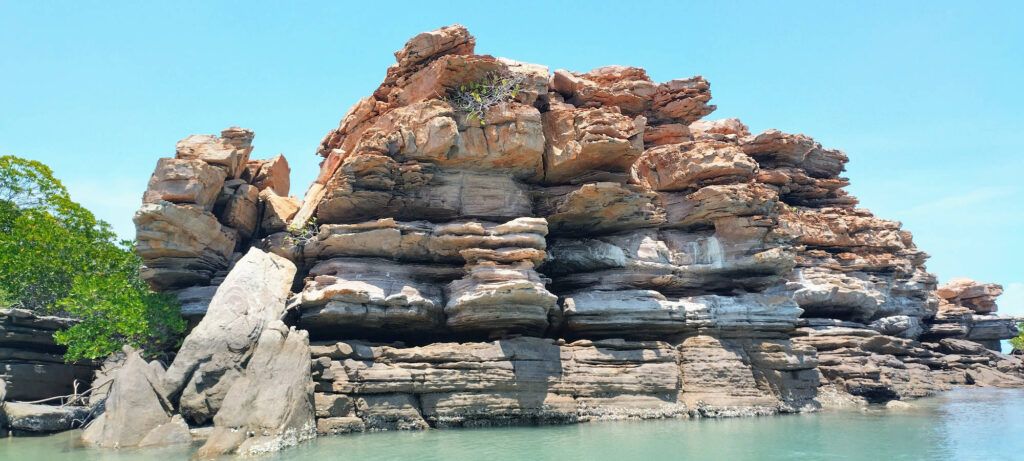
The rocky headlands are the typical fractured sandstone of this area, with lovely little beaches between, covered with the usual crocodile slides, and frantic fishing the with strong tidal currents running back and forth through Geranium Harbour to the south. The cove is large but very shallow, and with the tides that were predicted, didn’t feel it was safe to anchor within the cove as we would have been close to taking the bottom on the low tides. But it was not safe to stay anchored outside either.
While it was glassy calm for most of the time, we had storms building each afternoon and mostly followed the line of coast along the Bonaparte Gulf and passed to the east of us, each with fantastic lightning shows that lasted for hours. It caused us to consider the impact of so many strikes on the cliff country along the gulf that we had visited not long ago.
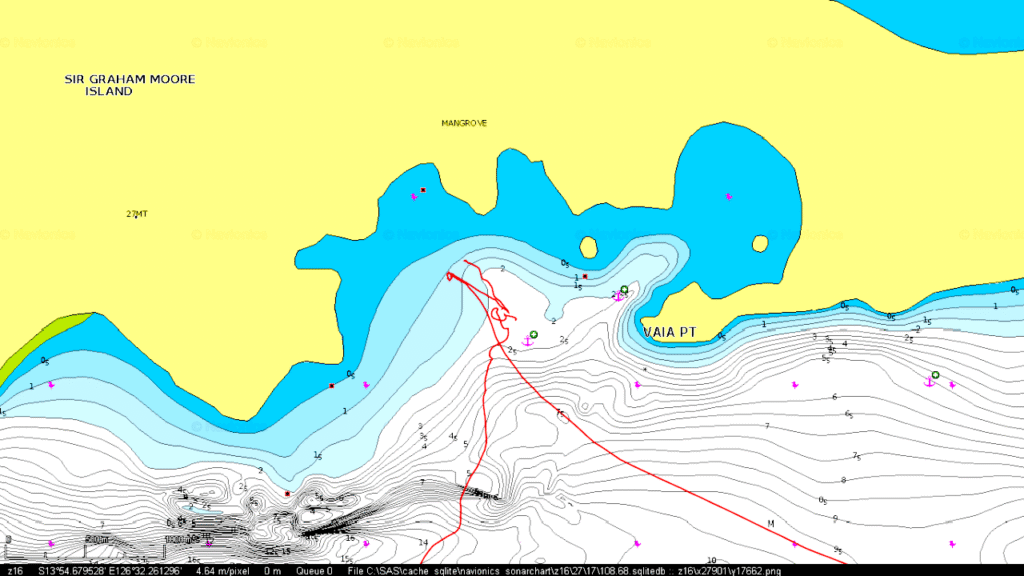
On the evening of the 12th, the storm that had been building all afternoon travelled in the same path and then turned and came to us, with winds gusting to only 25 knots, but enough to cause our anchor to drag. I though we had the anchor well set in sand in only two metre deep water, and had out 40m of chain, but we dragged back towards the shore at around a knot, so I suspected that we must have snagged up the anchor with the chain as we had circled around with the tide in calm conditions. With no moon and a dark sky, I knew we had time to wait for our navigation computer with the satellite images to boot up before taking action. Against the wind, it took almost 20 minutes to motor back to where the anchor had been set, and this time put down 80m of chain neatly layed out with the wind. But it dragged again. We held in place with the motors in gear and idling while we figured an alternative anchorage, at the same time communicating by radio with our buddies on Keira who were going through the same troubles, but had less time as they were so close to the shore. Then suddenly, the storm passed, and we didn’t have to move immediately. Instead, I set and anchor alarm in case we dragged again and wet to bed, and moved later the next day.
Navionics Chart
Bing Satellite

Leave a Reply