

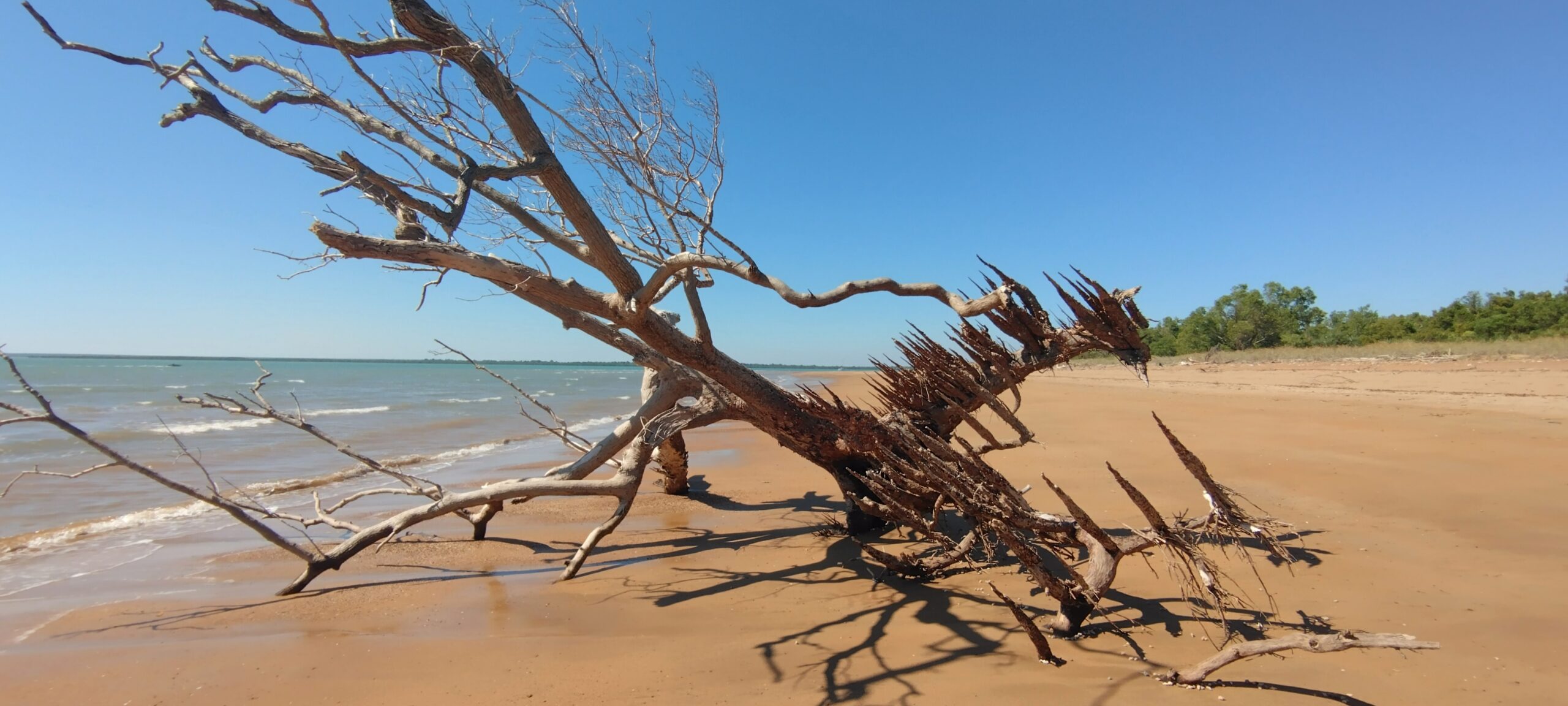
Today we had a walk on the beach on the western side of the mouth of Port Keats. The sand was soft and fluffy, which made relaunching the dinghy difficult on the falling tide, as the wheels were bogging down in the soft sand. We walked a track from the back of the dinghy down to the hard packed sand to compact it and make the job easier. The beach was littered with debris that must have been carried down the harbour with the flooding that would have followed Cyclone Fina as it passed along this coastline. Some of the debris was trees vegetation, but there was also a large amount of domestic rubbish too, probably from upstream at Wadeye.
The past two days were back to back sailing in the same diurnal land/sea breeze regime as we have been experiencing since Darwin. On the day we left Cape Ford, all was good at first with the ebb tide and very light breeze, but once the tide turned and the breeze dropped out altogether, we were making no progress south at all, and were reluctant to use the motor as we need to preserve our petrol for later in the trip. Eventually the sea breeze filled back in for a while, and we anchored in company off some stunning red cliffs just north of Cape Dombey.
Yesterday we had no wind in the morning, with the land breeze not firing. Wind filled in, and we headed off, but it only lasted 15 minutes. I decided that with the high water to cut inside the reef to our south, and found good water following what looked like a line of current on the satellite images. Once across and in to Hyland Bay, the wind dropped and the tide was rushing out against us, so we decided to anchor and let the tide ease before continuing on to Port Keats. With noise and a lack of power on their anchor windlass, Keira did no want to anchor in 10m depth, so they took a line from our stern to stay secure while we had lunch. It must have been a sight, as we attracted the attention of the Sea Rangers from Wadeye who came past in their motor boat to check we were ok.
The breeze came back from the NW, and we were soon under way and making good time before it knocked as we aimed to clear the reef that extends out from Tree Point. In the end we had to run a motor slowly to maintain safe control as we used the satellite to cut inside the intertidal zone on the chart, where the rocky bottom came up to 3m depth. The tide carried us in to anchor, where we enjoyed a very comfortable calm night after the last week sitting at exposed roadstead anchorages.
Leave a Reply